Framing That Restores Floor Strength
Structural Wood Repair in Bonham for homes with soft floors, visible sagging, or excessive movement when walking across rooms
Moisture infiltration, prolonged contact with damp soil, and insect activity degrade floor joists and beams until they lose load-bearing capacity—what once supported furniture and foot traffic now flexes excessively or sags visibly in the middle of a room. A+ Prolift Foundation Repair replaces damaged structural framing in Bonham, installing new floor joists, beams, sill plates, and related components using proper lumber grades and fastening techniques. Foundation movement compounds wood damage because settling creates uneven loads that stress framing members beyond their design limits, accelerating deterioration in areas already weakened by moisture or age.
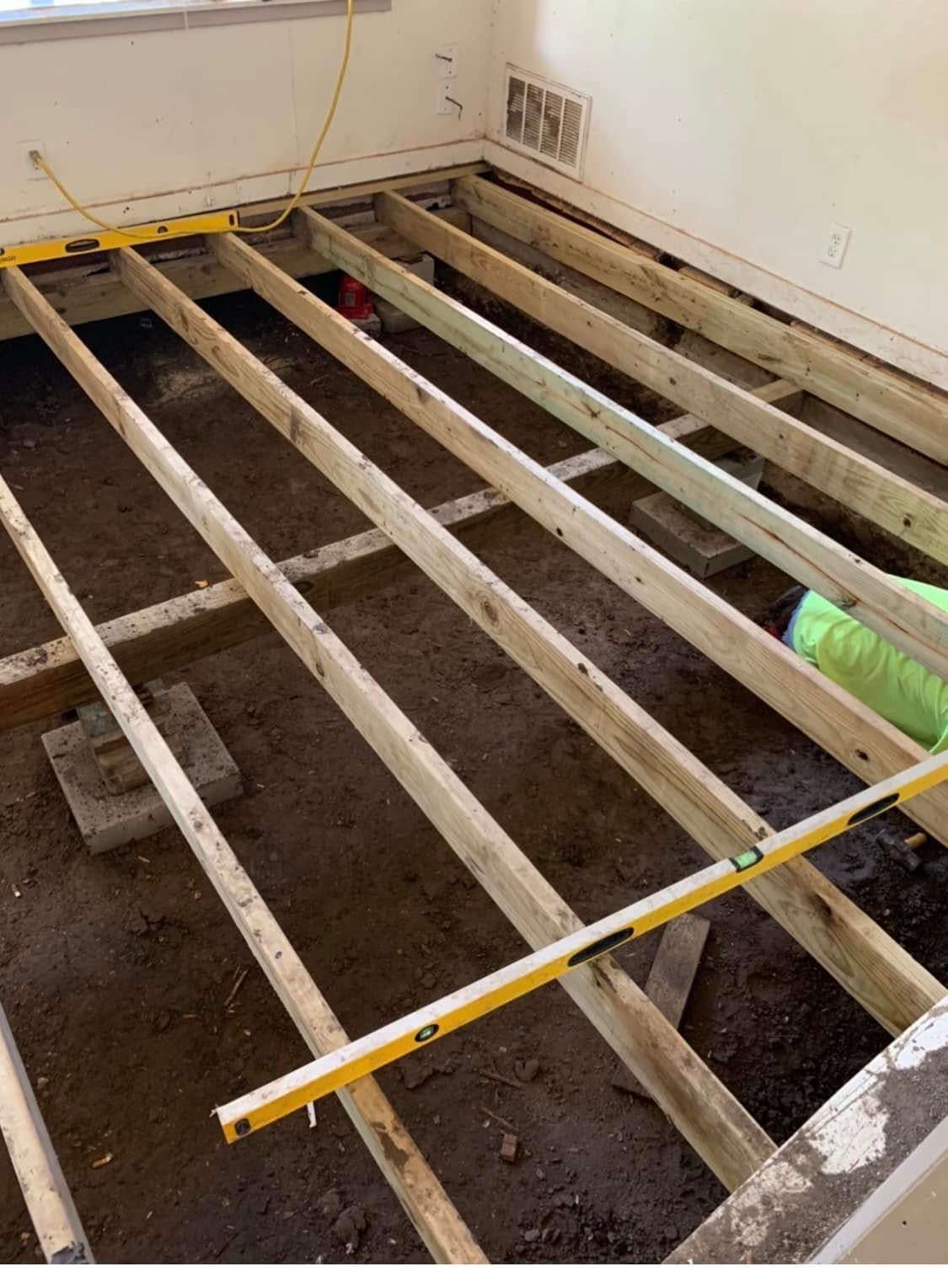
Wood replacement involves removing compromised members, verifying that the remaining structure can support loads properly, and installing new framing that meets current building standards. Quality repairs use lumber treated for ground contact when appropriate, galvanized or stainless fasteners in high-moisture areas, and properly sized members that eliminate the undersized spans sometimes found in older construction.
Arrange a structural inspection to determine how much of your floor framing has deteriorated and what replacement scope will restore full strength.
Why Proper Wood Replacement Works for Long-Term Stability
Structural wood repair starts with identifying which members have lost integrity—probing with an awl reveals soft spots where rot has progressed, visual inspection shows cracks or splits that compromise load paths, and deflection testing under load indicates where joists no longer provide adequate stiffness. Replacement involves sistering new joists alongside damaged ones when partial reinforcement suffices, or complete removal and installation when deterioration extends throughout the member. Sill plates resting directly on foundation elements receive particular attention because chronic moisture exposure attacks these components first.
After replacement, floors feel solid without the soft spots or excessive bounce that signaled failing joists, furniture no longer shifts as occupants walk nearby, and the structure supports loads without visible deflection. New framing restores the load paths that carry weight from the floor surface down through joists and beams to the foundation piers, eliminating the sagging planes and structural movement homeowners noticed before repair.
Wood repair alone doesn't resolve foundation issues—if pier settlement or inadequate support caused the framing to fail initially, those conditions require separate correction. The inspection determines whether you need only framing replacement, only foundation work, or both services coordinated to address the complete structural problem.
Questions Before Starting Your Project
Structural wood concerns involve understanding what caused the damage and whether repairs will hold long-term. North Texas moisture patterns and
crawl space conditions directly affect how floor framing deteriorates over time.
What causes structural wood to fail in floor systems?
Moisture from ground contact, plumbing leaks, or inadequate crawl space ventilation softens wood fibers and promotes rot, while termites and other insects consume weakened members—foundation movement creates stress concentrations that accelerate cracking in areas already compromised by moisture or pests.
How do you determine which joists and beams need replacement?
Inspection involves probing every accessible member with a tool to detect soft wood, checking for visible sagging or cracking, measuring deflection under load, and identifying which components have lost structural capacity versus which remain sound and require only support adjustment.
What symptoms indicate floor framing has deteriorated?
Soft spots in the floor that feel spongy underfoot, visible sagging between support points, excessive bounce when walking across a room, and cracks in flooring materials where underlying joists have failed all signal structural wood damage requiring evaluation.
What lumber and installation methods ensure quality wood repair?
Replacement framing uses properly graded dimensional lumber—often treated material in moisture-prone locations—installed with appropriate joist hangers, blocking, and fasteners, then shimmed or supported to match the correct elevation and eliminate sagging planes.
When should wood repair happen relative to foundation stabilization in Bonham?
If foundation settlement caused the framing to fail, stabilize the foundation first so new wood installs onto a corrected structure—repairing wood atop a still-settling foundation results in repeated failure as movement continues.
A+ Prolift Foundation Repair coordinates wood replacement with foundation corrections when both issues affect the same structure, ensuring that framing installs onto properly supported and level bearing surfaces. Schedule a structural framing assessment to identify which components need renewal and what additional foundation work should accompany the wood repair.