Symptoms That Appear Before Foundations Fail
Signs of Foundation Problems in Bonham for homeowners noticing cracks, sticking doors, sloped floors, or exterior brick separation
Drywall cracks that widen over months, doors that bind in frames during certain seasons, and floors that slope noticeably toward one side all point to foundation movement that started small and progressed as soil conditions changed beneath the structure. A+ Prolift Foundation Repair helps Bonham homeowners interpret these warning signs before minor shifting escalates into severe structural damage requiring extensive repairs. Properties built on expansive clay soils show symptoms gradually as seasonal moisture cycles cause soil to swell when wet and shrink when dry, creating the uneven support that moves foundations incrementally over years.
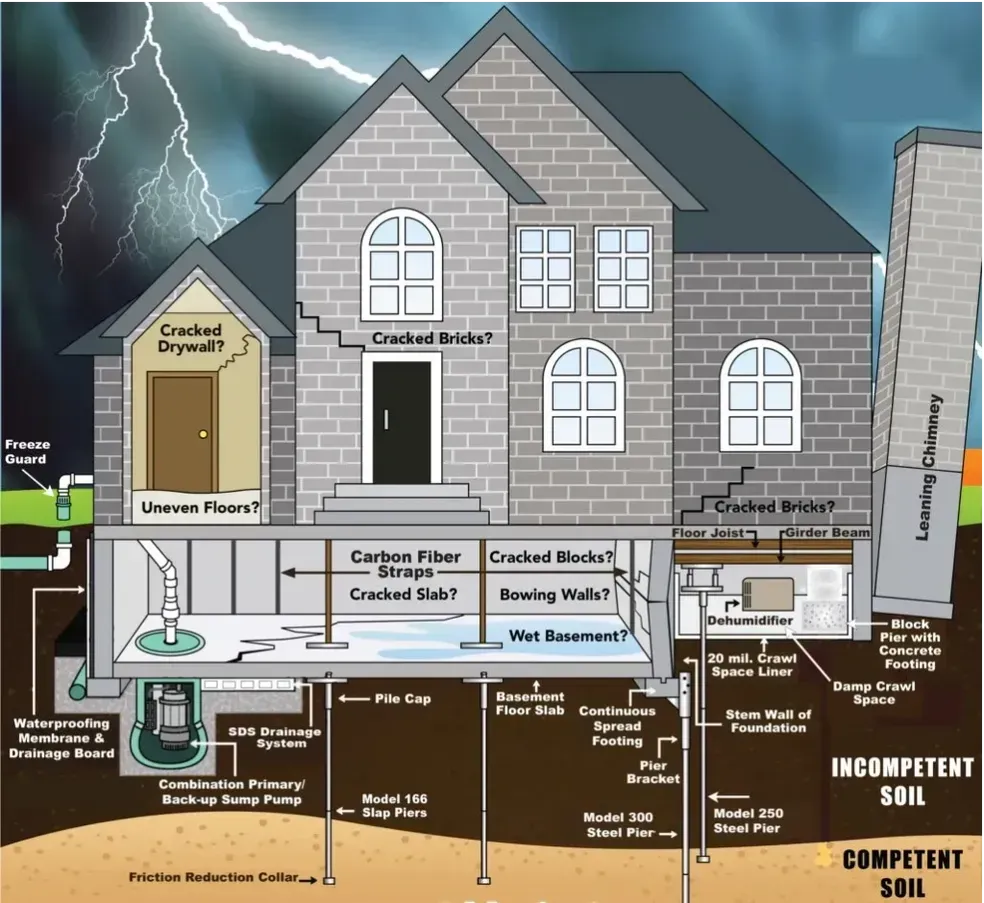
Foundation movement develops as soil beneath slabs, piers, or beams loses consistent support due to moisture changes, root activity, poor drainage, or erosion. Cracks in interior walls often appear at corners of door frames or where walls meet ceilings because these areas experience the most stress as the structure shifts. Exterior brick cracks typically form in stair-step patterns along mortar joints, while gaps open between brick veneer and door or window frames as the foundation pulls away from the wall system above it.
Schedule a comprehensive foundation inspection to identify which symptoms indicate active movement and what soil conditions are causing the problem.
What Structural Changes Indicate Foundation Movement
Early diagnosis involves measuring floor elevations across the structure, inspecting crawl spaces or basements for pier settlement, and evaluating exterior grade to determine whether water drains toward or away from the foundation. Doors and windows that stick during summer but operate normally after fall rains often signal seasonal soil shrinkage that pulls support away from one section of the foundation. Cracks wider than a quarter inch or those that grow noticeably over a few months indicate ongoing movement rather than normal settling that happened years ago and stabilized.
When foundation issues are diagnosed early, repairs typically involve fewer piers and less extensive underpinning because the structure hasn't shifted far enough to require major elevation corrections. Addressing problems before additional damage occurs prevents cracks from expanding into structural concerns that affect load-bearing walls or roof support. Monitoring new symptoms such as additional cracks, changes in door operation, or increasing floor slopes helps homeowners recognize when movement accelerates and requires professional evaluation.
Similar symptoms can result from different structural causes including foundation movement, wood rot in floor systems, or settling of improperly compacted fill soils, which means professional evaluation determines the actual source rather than assuming every crack indicates foundation failure. Some cosmetic cracks result from normal material shrinkage or temperature changes and don't signal structural problems, while others indicate significant movement that will worsen without intervention. Comprehensive inspections separate minor issues from those requiring immediate repairs and provide homeowners with a clear understanding of what's happening beneath their structure.
What Homeowners Usually Ask About Symptoms
Foundation concerns raise questions about which symptoms matter most, how quickly problems develop, and when repairs become necessary.
What's the difference between normal settling and foundation problems?
Normal settling typically completes within a few years of construction and doesn't produce new cracks or worsening symptoms, while foundation problems create ongoing changes such as widening cracks, increasing floor slopes, or doors that stick progressively worse over time.
How quickly do foundation problems develop in Bonham?
Movement rates vary depending on soil conditions and weather patterns, with some properties showing gradual changes over years while others experience rapid shifting during severe droughts or after major plumbing leaks that suddenly alter soil moisture.
Do all foundation cracks require immediate repair?
Hairline cracks that haven't changed in years often indicate old movement that stabilized, while cracks wider than a quarter inch or those that grow noticeably within months signal active problems that will likely worsen without corrective action.
What causes floors to slope in older homes?
Sloped floors result from foundation settlement, pier failure, or beam sag, with the specific cause determined by measuring elevation differences and inspecting support systems beneath the floor to identify where support has degraded or soil has shifted.
Can foundation problems be monitored instead of repaired immediately?
Monitoring makes sense for minor symptoms that may stabilize, but active movement indicated by worsening cracks or increasing slopes typically continues until the underlying cause receives correction, meaning delays often increase eventual repair costs.
A+ Prolift Foundation Repair provides detailed inspections that measure structural symptoms, evaluate soil conditions, and explain which signs indicate active foundation movement requiring intervention. Set up an evaluation to understand what your home's symptoms reveal about foundation stability and what action timeline makes sense for your situation.