Water Management That Prevents Foundation Damage
Drainage Systems in Bonham for properties experiencing standing water, soil erosion, or moisture accumulation near structures
North Texas clay soils expand when saturated and contract during dry periods, creating the differential soil movement that stresses foundations—drainage systems control where water goes so it doesn't pool against foundation perimeters or saturate the soil unevenly beneath structures. Water flowing toward the house after storms, downspouts discharging too close to the foundation, and low spots that hold standing water all contribute to the moisture gradients that cause one section of the foundation to swell while another settles. A+ Prolift Foundation Repair designs drainage solutions in Bonham that redirect water away from structures, reduce soil saturation, and minimize the expansion-contraction cycles that undermine long-term foundation stability.
Comprehensive drainage planning evaluates the entire property—where water enters, how it flows across graded surfaces, where it collects, and whether existing systems have failed or were never installed properly. Solutions include regrading soil slopes to direct water away from the foundation, extending downspout discharge points beyond the critical zone, installing surface or subsurface drainage channels where natural flow patterns direct water toward the structure, and improving soil permeability in areas where clay holds water too long.
Schedule a drainage evaluation before water problems lead to foundation movement or structural damage that requires expensive stabilization.
How Controlling Water Helps Reduce Structural Damage
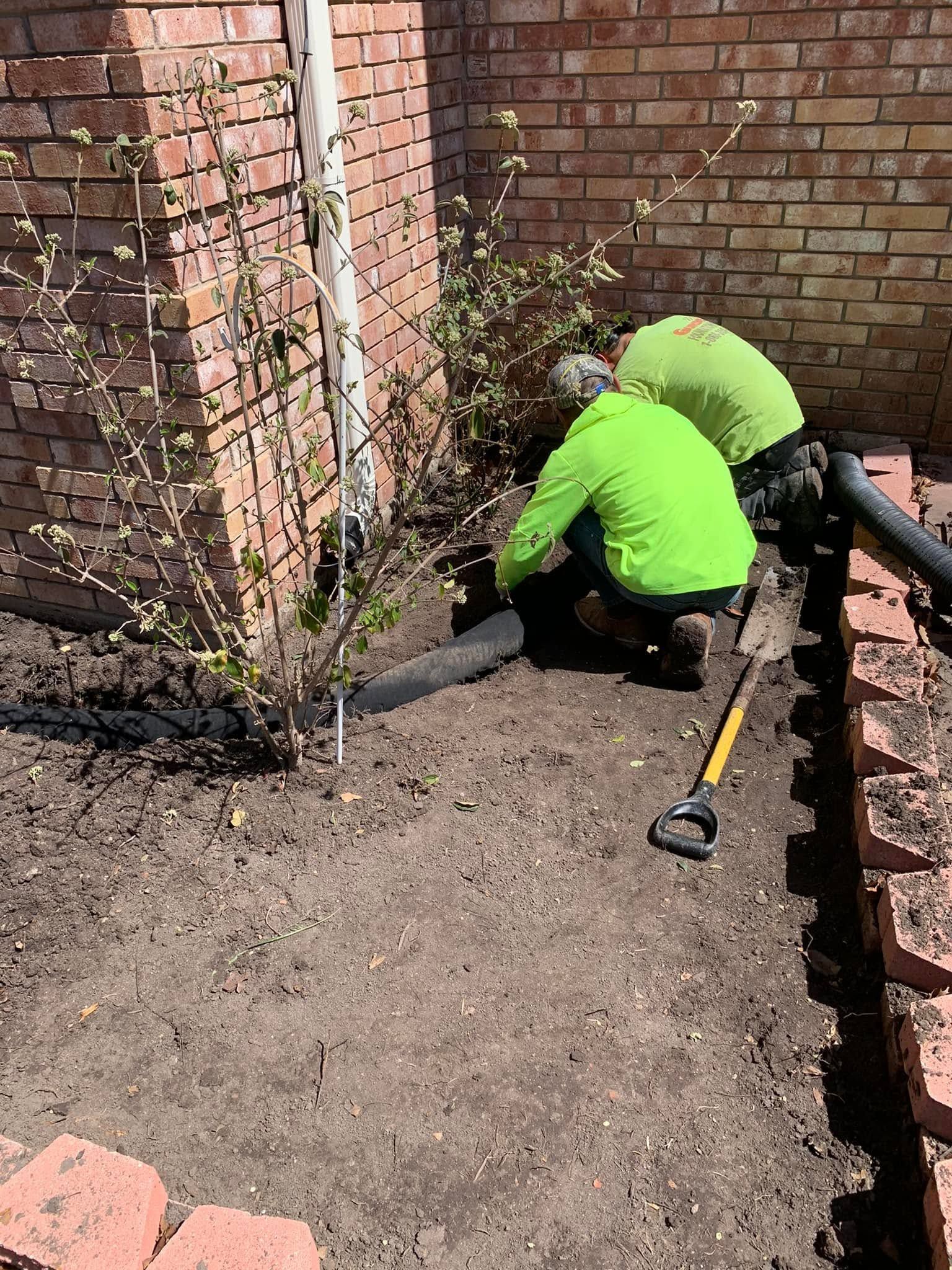
Effective drainage starts with understanding where water accumulates and why—roof runoff concentrating at one corner, adjacent properties graded to drain onto your lot, or hardscaping that blocks natural flow paths all create conditions where water can't escape and instead saturates the soil near the foundation. Grading improvements reshape soil surfaces to create positive drainage away from the house, while subsurface systems intercept water before it reaches problem areas and convey it to appropriate discharge points. Proper installation accounts for soil type, existing elevations, and how heavy rain events behave rather than just average conditions.
Once drainage corrections complete, you notice water flowing away from the foundation during storms instead of pooling along the perimeter, previously saturated low spots drying out between rain events, and soil around the structure maintaining more consistent moisture levels rather than swinging between saturated and bone-dry. Controlled water movement reduces the soil expansion that pushes foundations upward and the contraction that pulls support away, protecting the structure from the differential movement that causes cracking and settling.
Drainage work doesn't replace foundation repair when structural damage has already occurred—it prevents additional movement and protects completed repairs from recurring damage. The assessment determines whether your property needs only drainage improvements, only foundation stabilization, or both services in sequence to address current damage and prevent future problems.
What Property Owners Usually Ask
Drainage questions often focus on recognizing problems early and understanding how water management ties to foundation health. Bonham's soil conditions make drainage particularly important for preventing long-term structural issues.
How does poor drainage contribute to foundation movement?
Water accumulating near the foundation saturates clay soils unevenly, causing expansive soils to swell and push upward in wet areas while other sections settle or remain stable—this differential support creates the cracks, floor slopes, and structural stress that require foundation repair.
What does comprehensive drainage planning involve for residential properties?
Evaluation includes mapping existing grades and flow patterns, identifying where water collects or flows toward the structure, assessing downspout discharge locations, checking for soil erosion or saturation zones, and developing a correction plan tailored to your property's topography and soil conditions.
When should grading improvements happen relative to foundation repairs in Bonham?
Drainage corrections typically occur after foundation stabilization or concurrently with pier installation, since controlling water prevents the soil conditions that caused the original damage from recurring and compromising the repair investment.
What signs indicate drainage problems need attention?
Standing water that persists more than a day after rain, soil erosion near the foundation, water stains on exterior walls, downspouts discharging within a few feet of the house, and foundation cracks that coincide with wet areas all signal inadequate drainage.
How do customized drainage recommendations differ from standard solutions?
Site-specific plans account for your property's existing grades, soil permeability, roof drainage patterns, and adjacent lot conditions—generic approaches often fail because they don't address the unique factors directing water toward your foundation.
A+ Prolift Foundation Repair evaluates drainage as part of foundation assessments because water management directly affects whether structural repairs remain stable long-term. Request a property drainage evaluation to identify where water control improvements will protect your foundation from recurring movement and soil instability.