Fixing Yards That Stay Wet After Rain
French Drains & Exterior Drainage in Bonham for properties with standing water, soil erosion, and saturated ground near foundations
Standing water that lingers for days after rainfall often signals inadequate subsurface drainage that allows groundwater to pool rather than flow away from structures. A+ Prolift Foundation Repair installs French drains and exterior drainage systems throughout Longview and Bonham designed to collect and redirect groundwater before it saturates foundation soils or erodes landscaping. Homeowners dealing with muddy yards, water-damaged flowerbeds, or damp crawl spaces typically need perimeter drainage solutions that address the source rather than the symptoms.
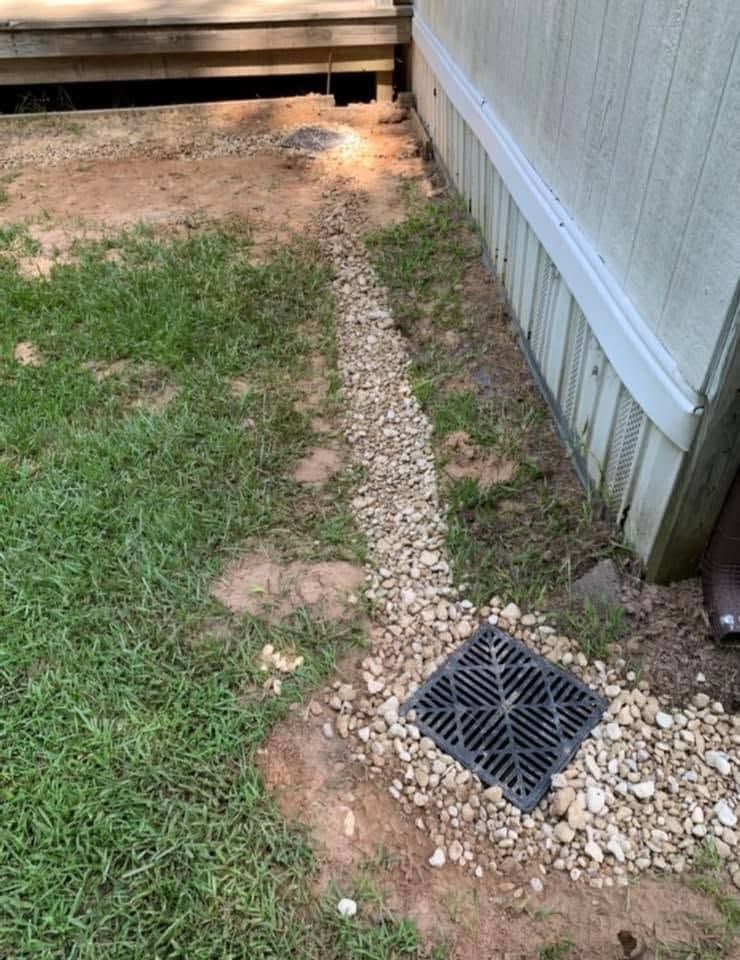
French drains work by creating an underground channel filled with gravel and perforated pipe that intercepts groundwater and carries it away from vulnerable areas. Perimeter drains installed along foundation edges capture runoff before it reaches the building, while catch basins collect surface water from low spots and direct it into the drainage network. Surface grading adjustments ensure water flows toward drains rather than pooling against structures or creating erosion channels across sloped yards.
Schedule a drainage inspection to identify where water collects on your property and which system will redirect it most effectively.
What Proper Exterior Drainage Prevents Long-Term
Professional drainage installation begins with identifying where groundwater enters the problem area, where it needs to exit, and what gradient will sustain consistent flow without clogging. The trench depth and gravel layer surrounding the perforated pipe determine how much water the system captures during heavy rain events. Systems designed for North Texas clay soils account for slow percolation rates that cause water to move laterally rather than absorbing downward, which makes perimeter interception essential for keeping foundations dry.
Once a French drain or perimeter system is installed, you'll notice standing water clears within hours instead of days after storms, soft spots in the yard firm up as soil dries out, and erosion channels stop expanding across slopes. Foundation soils maintain more consistent moisture levels because groundwater no longer saturates the area during wet periods or pulls away during droughts. Landscaping near the home survives better because roots aren't alternating between waterlogged conditions and dry stress.
Exterior drainage also reduces hydrostatic pressure against basement walls and prevents the soil expansion cycles that cause foundation movement in expansive clay. Systems installed with proper outlet routing ensure collected water discharges to a safe area such as a street drain, drainage easement, or natural grade away from neighboring properties. Regular maintenance involves checking outlet points remain clear and verifying gravel channels haven't compacted enough to restrict flow.
Questions Property Owners Ask About Drainage Work
Drainage projects raise practical questions about how systems function across different soil types and what results look like once installation is complete.
What keeps a French drain from clogging over time?
The perforated pipe sits inside a gravel-filled trench wrapped in filter fabric that blocks soil particles while allowing water to pass through, and proper gradient ensures continuous flow that prevents sediment buildup inside the pipe itself.
How do catch basins work with French drains?
Catch basins collect surface runoff from low areas or downspouts and funnel it into the underground drainage network, which means water that would otherwise pool on the surface gets redirected through the same system handling subsurface groundwater.
When should drainage be installed relative to foundation repairs?
Drainage improvements often happen alongside or immediately after foundation stabilization in Bonham so that corrected structures stay protected from the moisture fluctuations that caused the original movement.
How far from the foundation should perimeter drains be placed?
Installation typically positions the drain trench within a few feet of the foundation edge to intercept groundwater before it reaches the structure, with exact placement depending on yard slope and where water naturally flows during storms.
What happens to the collected water after it enters the system?
The perforated pipe carries collected groundwater downhill to an outlet point such as a street curb drain, drainage swale, or existing creek, ensuring water leaves the property entirely rather than resurfacing in another problem area.
A+ Prolift Foundation Repair evaluates your property's drainage patterns and recommends systems that address both surface runoff and subsurface groundwater based on observed water movement during wet conditions. Request a site evaluation to develop a customized drainage solution that protects your foundation and eliminates standing water problems.